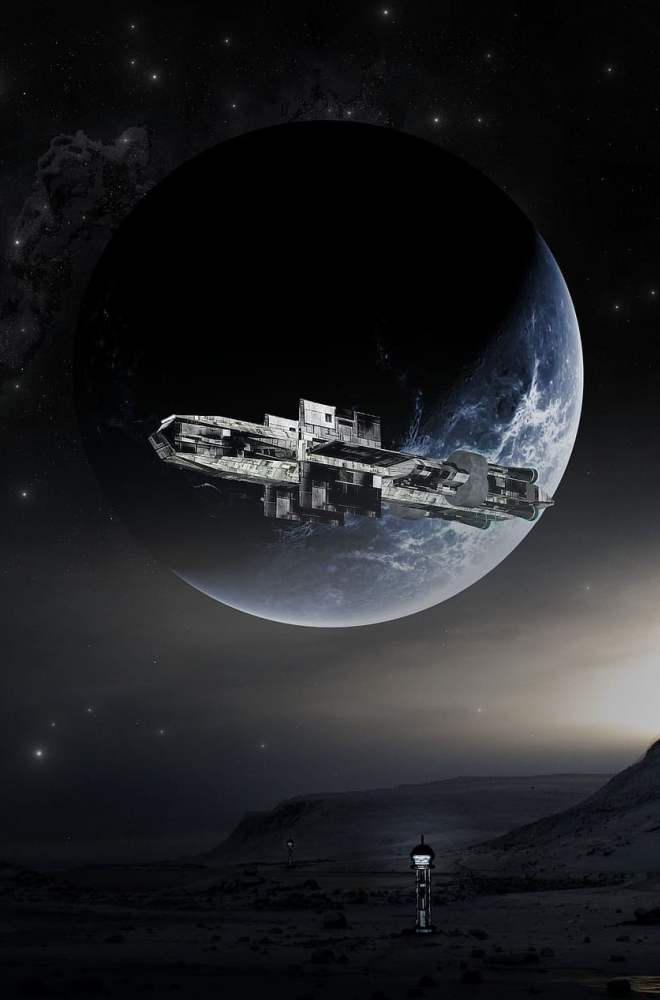
I Have No Mouth and I Must Scream by Harlan Ellison
Purchase I Have No Mouth and I Must Scream
Nomads of Gor
John Norman
Join celebrated tarnsman Tarl Cabot in his latest adventure on the parallel planet of Gor and its exotic lifestyle and social norms. Tarl has dedicated his life to ensuring that the Priest-Kings survive the...
The Erotic Comedies
Marco Vassi
A collection of fables and memoirs by America's foremost erotic writer does for our era what Boccaccio, Swift, and Balzac did for theirs--exposes the human animal in all its absurdity. Vassi takes erotic...
The Man Who Wrote Dirty Books
Hal Dresner
This comic novel, told in epistolary fashion as a sequence of exchanged letters, presents pornographer “Guy LaDouche” retreating to the wilderness with the hope of solitude and concentration to write his next ...
The Disappearance of Gregory Pluckrose
Elizabeth Gundy
"Let me make clear from the outset, I detest adventure. It's tasteless, showy, vulgar, and uncalled for." So begins this delicious thriller about a gay interior decorator who joins his super-wealthy clients ...
Ellison Wonderland
Harlan Ellison
Originally published in 1962 and re-issued in 1974 and in 1983, Ellison Wonderland contains sixteen stories with copyrights ranging from 1956 to 1961. This edition contains an Introduction written for the 19...
Lead Us Not Into Penn Station
Bruce Ducker
The year is 1955, and the world of Danny Meadoff spins with ease and stability. Eisenhower is president, soul groups are black, NBA teams are white. Fathers do not speak with sons. The Dodgers have jumped out ...
Web of the City
Harlan Ellison
Harlan Ellison was awarded an honorary degree from UCLA for the excellence of his imaginative writings. Some smartass might even call him "Dr." Ellison. But only once. Because even though Ellison has come...

I Have No Mouth and I Must Scream

by Harlan Ellison
[ Fiction ]

First published in 1967 and re-issued in 1983, I Have No Mouth and I Must Scream contains seven stories with copyrights ranging from 1958 through 1967. This edition contains the original introduction by Theodore Sturgeon and the original foreword by Harlan Ellison, along with a brief update comment by Ellison that was added in the 1983 edition.

Among Ellison’s more famous stories, two consistently noted as among his very best ever are the title story and the volume’s concluding one, “Pretty Maggie Moneyeyes”. Since Ellison himself strongly resists categorization of his work, we won’t call them science fiction, or SF, or speculative fiction or horror or anything else except compelling reading experiences that are sui generis. They could only have been written by Harlan Ellison and they are incomparably original.

INTRODUCTION

THE MOVER, THE SHAKER

My report on Harlan Ellison's Paingod in National Review evoked the following, from a right-wing gentleman in Pennsylvania:

Harlan Ellison, contrary to the otherwise astute Theodore Sturgeon, is no more a major "prose stylist" than the editorial writer of the Plumber's Journal or The New York Times. Instead, he stands unchallenged as the god-awfullest writer ever to become submerged in the vaseline of synonyms and antonyms.

What Mr. Sturgeon mistakes for "image-making" is merely the slick conundrum of an empty-headed self-lover who, unhappily, believes that the bathroom ritual of personal daily resurrection, when inflated rhetorically, is 14" pegged prose. What emerges is not a "style" but rather a sort of neologistic bawling from the belly. It reminds one of the yips and yaps to be heard in the war councils of imbecilic demonstrators, from Berkley [sic] to Boston.

Ellison's "mad, mixed metaphors" are only less puerile than those of a certain Pennsylvania Supreme Court Justice, and his "unfinished sentences" no different in construction than those to be found in the diary of a lady golfer or political speech writer suffering from Liberal emphysema.

If our penitentiaries offered courses in creative writing we would soon be inundated with little Harlan Ellison's [the apostrophe also sic], all of them, to be sure, "groovy" and all of them ghastly. His unconcealed hostility toward his betters is evident in nearly everything he has ever written. That he is reviewed in a magazine noted for correct English (and often bad French) will probably embarrass the fellow. It does me.

To which I replied:

I find no hesitation in deeping Mr.--'s embarrassment by demonstrating that he could not possibly have read my review of Paingod and Other Delusions with care, which leads inescapably to the deduction that he has not carefully read Ellison. For the tenor, sum and substance of my report was not that Harlan Ellison is a major prose stylist, but that in three to five years he shall be. Further, I did not in the review concede that Ellison is capable of atrociously bad writing--I proclaimed it. I said in effect that this extraordinarily energetic young writer is a man on the move, so watch him. Style, like taste, is resistant to lucid definition; however, both, as living things should be, are subject to constant change. For example, I can clearly recall the time when it was regarded as both stylish and tasteful to capitalize proprietary terms like Vaseline and God (at any degree of awfulness) and hardly tasteful to admit to any expertise on the style of ladies' diaries.

You hold in your hands a truly extraordinary book. Taken individually, each of these stories will afford you that easy-to-take, hard-to-find, very hard-to-accomplish quality of entertainment. Here are strange and lovely bits of bitterness like "Eyes of Dust" and the unforgettable "Pretty Maggie Moneyeyes," phantasmagoric fables like "I Have No Mouth & I Must Scream" and "Delusion for a Dragon Slayer."

I have something interesting to tell you about that last-mentioned story. Almost anyone who has been under the influence of a (and Purists please note: I tried) hallucinogen can recognize the "psychedelic" quality of this story and its images, even to a fine detail like the almost total absence of sound during the shipwreck sequence, and of course the kaleidoscopic changes of persona and symbol. Yet I know for a fact that Harlan has never had this experience, and is one of those who could not be persuaded under any circumstances to undergo it. I got a special insight on this one night at a party when his hostess graciously offered him the opportunity to "turn on." "No, thanks," he said. "Not until I come down."

Which would remain a good-humored whimsy but for something a biochemist told me a couple of years ago. It seems that there is a blood fraction which is chemically almost identical with the hallucinogen psilocybin. It's manufactured in the body and like most biochemicals, differs in concentration in the bloodstream from person to person, and in the same person from time to time. And, said my biochemist friend, it is quite possible that there are some people who are born, and live out their lives, with a consciousness more aware, more comprehending, more--well, expanded--than those of the rest of us. He cited especially William Blake, whose extraordinary drawings and writings, over quite a long life, seemed consistently to be reporting on a world rather more comprehensive than one we "know" he lived in.


I Have No Mouth and I Must Scream