E-Reads™ is
...a trail-blazing reprinter of out-of-print genre and general fiction and nonfiction by leading authors. Our books are available in all e-book formats and paperback. Read the latest publishing news and provocative blogs by top commentators in the traditional and digital publishing fields.
Marriage Is a Bad Habit
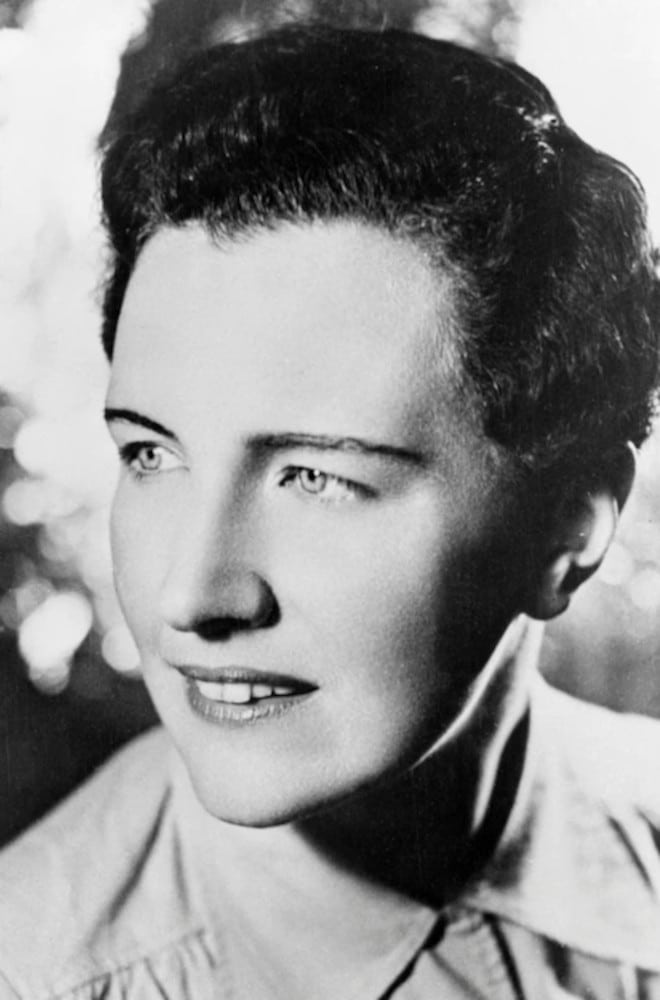
Ruth Dickson
When Ruth Dickson released her 1967 book MARRIED MEN MAKE THE BEST LOVERS, it went off like a bombshell. Defenders of the “sanctity” of marriage rose up to dismiss her frank, innovative, thoroughly resear...
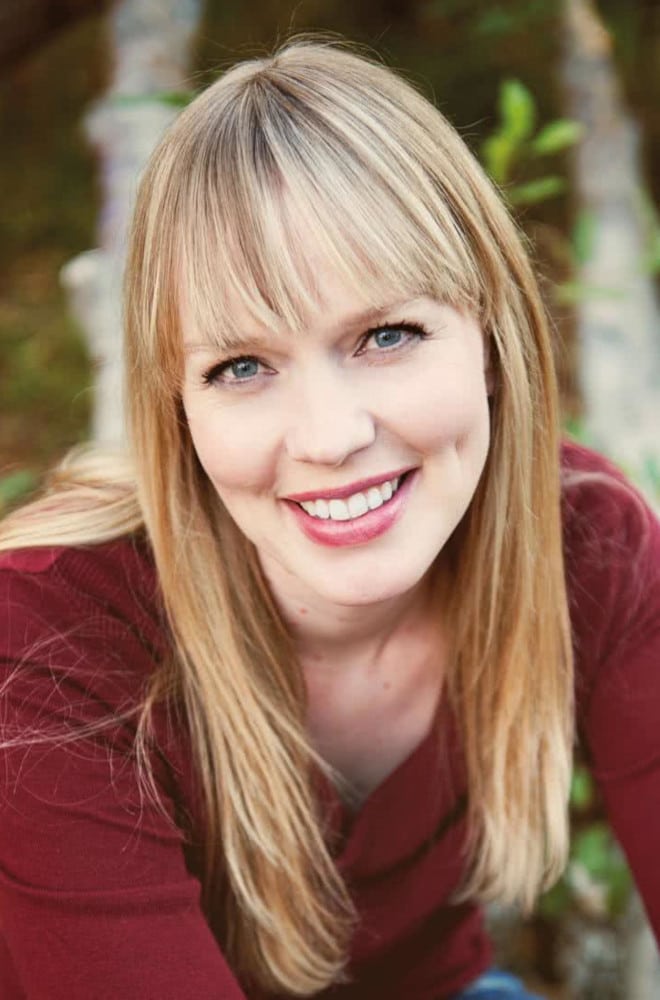
Orion's Dagger
Paula Downing King
With ORION’S DAGGER, Paula E. Downing presents the thrilling final installment of THE CLOUDSHIPS OF ORION trilogy, which Starlog magazine called “special...a thoroughly engrossing story.” The trio wa...
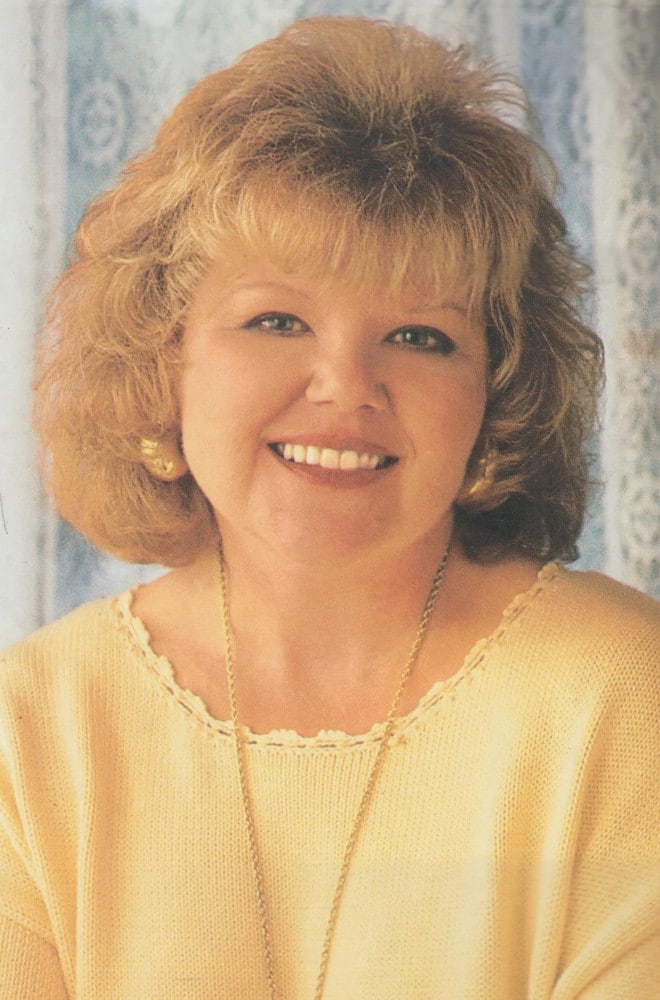
Fair Warning
George E. Simpson
America is set to finally end World War II with a devastating act--dropping the atomic bomb over Japan. But what if a secret mission was set in place to alter the course of history? In this fast-paced, and i...
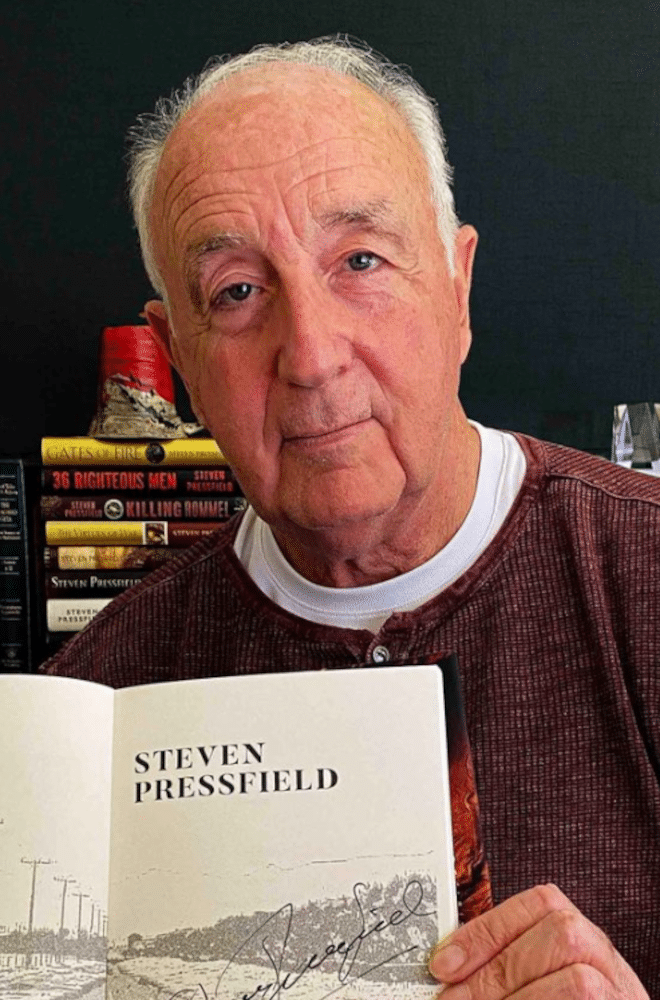
Rogues of the Black Fury
Travis Heermann
When a band of shadowy fanatics abducts Javin Wollstone’s little sister, Bella, from his care, his only hope to bring her home is turning to a hard-bitten band of special warriors, the Black Furies, led by C...
The Sudden Star
Pamela Sargent
The appearance of a white star bathing the world in a deadly glare turns Earth into a nightmare of fear and death. Rape and murder are as common as suicide. Medical help is allowed only for certain diseases, a...
The Man in the Moon Must Die
Jeff Bredenberg
What do a cunning old man, a code-slopper gone rogue, a pair of lowlife tech-runners, a sexually frustrated AI, and a hermaphrodite underworld boss have in common? They're all out to get Benito Funcitti, ow...
The Woman Who Loved the Moon
Elizabeth A. Lynn
Elizabeth A. Lynn stands as a ground-breaking author of fantasy and science fiction. Her stories weave richly-drawn characters and complex scenes of daily life into the intricate tapestry of speculative ficti...
Taking Hawaii: How Thirteen Honolulu Businessmen Overthrew the Queen of Hawaii in 1893, With a Bluff
Stephen Dando-Collins
On a January afternoon in 1893, men hunkered down behind sandbagged emplacements in the streets of Honolulu, with rifles, machineguns and cannon ready to open fire. Troops and police loyal to the queen of th...
Shadowdance
Robin W. Bailey
Paralyzed since birth, a young man named Innowen happens upon a sorceress along the road. She grants him the ability to walk, but there are two conditions—he can only walk between dusk and dawn and, to kee...
Ratha's Challenge
Clare Bell
Twenty-five million years in the past, a clan of sentient, prehistoric big cats called “the Named” have their own language, traditions, and law. Ratha, a female Named, has brought fire to the clan and ...
FEATURED TITLES
Our Lady of Darkness
Fritz Leiber
Fritz Leiber (1910-1992) may be best known as a fantasy writer, but he published widely and successfully in the horror and science fiction fields. His fiction won the Hugo, Nebula, Derleth, Gandalf, Lovecr...
The Black Gondolier and Other Stories
Fritz Leiber
Announcing a new collection of stories by Fritz Leiber. Assembled here is a selection of Mr. Leiber's best horrific tales, many of which have been virtually unobtainable for decades. From the riveting "Spider ...
LockeStep
Jack Barnao
Professional bodyguard John Locke is in no mood to baby-sit Greg Amadeo, a drug dealer turncoat who wants to visit his wife in Mexico, collect some cash and settle debts before testifying in the States, but...
Thirty-Three Teeth
Colin Cotterill
Dr. Siri Paiboun, one of the last doctors left in Laos after the Communist takeover, has been drafted to be national coroner. He is untrained for the job, but this independent 72-year-old has an outstandi...
The Soong Sisters
Emily Hahn
In the early twentieth century, few women in China were to prove so important to the rise of Chinese nationalism and liberation from tradition as the three extraordinary Soong Sisters: Eling, Chingling and May...
Living with Aliens
John DeChancie
What more could a thirteen-year-old want than two best friends who can help him get his first girlfriend? Young Drew finds out when he befriends two aliens, Zorg and Flez, who help him take his new girlfr...
Slaughter In The Ashes
William W. Johnstone
After the apocalypse destroyed what was left of America, Rebel leader Ben Raines helped create the Tri-States. But no system is perfect: criminal gangs still roam the land, spreading havoc and violence. The...
Fire in the Ashes
William W. Johnstone
The year is 1999 and the world is a smoldering shell of its former self, ravaged by the tragic spoils of nuclear warfare. Amid the holocaust, there are survivors. Although few, there are enough to rebuild a...
Showstopper!
G. Pascal Zachary
Showstopper is the dramatic, inside story of the creation of Windows NT, told by Wall Street Journal reporter G. Pascal Zachary. Driven by the legendary Bruce Cutler, a picked band of software ...
The Dark Place
Aaron Elkins
Deep in the primeval rainforest of Washington State's Olympic Peninsula, the skeletal remains of a murdered man are discovered. And a strange, unsettling tale begins to unfold, for forensic anthropologist...
The Jaguar Princess
Clare Bell
Mixcati’s people are descended from the Olmec Jaguar Gods and she is fated for great things—both wonderful and dangerous. She can, unexpectedly and without warning, turn into a living, wild Jaguar, jus...
The Forge of God
Greg Bear
On July 26th, Arthur Gordon learns that Europa, the sixth moon of Jupiter, has disappeared. Not hiding, not turned black, but gone. On September 28th, Edward Shaw finds an error in the geological ...
Chaining the Lady
Piers Anthony
The CLUSTER series of SF adventures is set in a future focused on colonization of distant planets. Sphere Sol is about 100 light years in diameter, centered on the Earth’s sun. Surrounding this spher...
The Psychic Power of Animals
Bill D. Schul
Pets are more than companions. The animals we share our lives with are channels to another world. Documentation exists that proves animals do indeed possess a sixth sense. Discover the mysterious and fantastic...
Nebraska - Boss Man From Ogallala
Janet Dailey
Every novel in this collection is your passport to a romantic tour of the United States through time-honored favorites by America’s First Lady of romance fiction. Each of the fifty novels is set in a dif...

Archive for 2004

James Glass Interview

E-Reads spoke to James Glass about his novel in April 2004.

E-Reads: Shanji is the start of your trilogy, but did you consider that it would be such when you sat down and began your writing?

James: I started out with the idea of writing a stand-alone female-warrior novel. Its evolution led to the coming birth of a super-child and led directly to the second book, Empress of Light, which I thought might end it. By the middle of Empress of Light I realized there had to be a third book [The Creators - also available from E-Reads] to finish up the story of Kati and her amazing family.

What have you heard from your readers and fans about this book? Not many male SF writers can do so well with strong female protagonists, which is quite an accomplishment on your part.

I’ve received very positive feedback on Shanji and the other books from both women and men. Women comment more on the emotions and the romance, and do seem to like how I handle female protagonists. The men, on the average, comment more on the action scenes, but appreciate strong female characters, too. And people who liked Shanji have enjoyed all three books in the trilogy. (The Creators was actually my favorite to write, and the one most emotionally draining for me.) Catherine Asaro, who writes good romance in her science fiction, has been very complimentary about the books and I appreciate her encouragement. I’m a romantic at heart, and I like passion in my characters.

E-Reads has released the first and last book of the series. Is the second book, Empress of Light, available, too?

The Baen mass-market edition of Empress of Light is still available, though the numbers are getting down there. Baen is very good about keeping books in print until the last one is out of the warehouse.

I understand you’re fast becoming a popular writer of short fiction with some of the best SF magazines. What are your current projects and what is your booksigning schedule for the summer?

I write the shorter stuff in spurts every couple of years and in between novels. The recent ‘spurt’ seems to be ending up in Analog, with a novelet in the March issue and two short stories to come out later. My science fiction appears mostly in Analog, and my dark fantasy is in Talebones. A general bibliography is on my website at www.sff.net/people/jglass/.

I wrote off and on for years, getting my first hand-written rejection slip when I was thirteen, but didn’t publish until I was nearly fifty. Getting college degrees, raising a family, being a rocket scientist and then a thirty-five year career as physics professor and dean took most of the time. I published over 80 papers in molecular biophysics and superconductivity, but my serious fiction writing began in 1988. I won the Grand Prize of Writers of the Future in 1990 and things took off from there. Since then I’ve sold seven books and three dozen shorter pieces. Readers can get a good sampling of my short fiction over the past fifteen years by getting my new collection “Matrix Dreams and Other Stories” just out this month from Fairwood Press. Go to www.fairwoodpress.com for details.

Currently I’m working on two books. In one, an immortal son pursues his father across a galaxy to help save a civilization, only to find the job is his to do. The other book is my ‘Stargate meets X-files in Sedona, Arizona’ novel, which I call a fast read on an airplane. And I continue to scribble notes for other novels and short stuff. I’ll be signing at Miscon in Missoula, Montana in May, and Westercon in the Phoenix area in July. Bookstore signings for summer will be in the northwest, but in fall I’ll also sign at Orycon in Portland in November and Archon, near St. Louis in October. Check my newsgroup for news through the link on my web page.

Thanks, James.


Damien Broderick and Rory Barnes Interview

E-Reads interviewed Damien and Rory about their novel The Hunger of Time in March, 2004.

E-Reads: What was the inspiration for The Hunger of Time?

Damien and Rory: It’s no accident that the book is dedicated to the great SF writer Poul Anderson, who sadly died several years ago but not before he’d read our early draft and told us he liked what we’d done. That was very gratifying, because we’d chosen to design the novel using a method Poul pioneered in his classic novel Tau Zero, in which the engines of a starship fueled by hydrogen in space get jammed on, so the ship accelerates faster and ever faster until it carries its crew to the end of the cosmos.

In Poul’s version, the big bang at the start of space time is mirrored by a big crunch at the end, with all the galaxies collapsing back into a gigantic `atom’. His starship rather magically manages to orbit this cosmic egg through its expansion into a new universe, where the crew finally slow and find a new home planet. Since then, though, science has learned that the universe is actually expanding ever faster, not slowing, so the end of space and time seems fated to be eternal cold and emptiness. A grim prospect. How could you tell an engaging, warm, human story against such a bleak background? Well, we took a leaf from Poul’s book. His method was to use what a mathematician might call logarithmic progression from one chapter to the next: each step is exponentially greater than the one before. It’s a very interesting way to match ordinary human time against the vast expanses of cosmic duration.

In each segment of the story, our characters plunge farther and then immensely farther into the future. It’s as if the first time you woke up, it was the next day (as usual); the next time, it was 10 days later; the next, 100 days later; the next, 1000 days had passed; then 10,000 days, 100,000 days… You get the picture. It doesn’t take many days before you’d be far into the deep future. Something like that happens to our family, Hugh, Grace, Suzanna and Natalie. The world gets insanely strange, fast, then stranger still. This way of telling the story is a sort of metaphor for what might really happen to the human species much sooner than that. Damien has discussed an event some scientists expect to erupt around the middle of this century, which some call the Singularity and we’ve called the Spike (because that’s shorter and easier to picture). At the Spike, many kinds of new technology converge and accelerate each other’s progress. In short and shorter periods of time, more and more jumps in scientific and technical knowledge will be attained, if this picture of the near future is true. Change ends by running straight up the graph of progress, like a spike. In The Hunger of Time, a sort of botched Spike occurs in the near future, following a terrible global plague, the kind of medical emergency that the SARS outbreak threatened to become. Our four characters manage to avoid that plague, by leaping forward in time, but they find they can’t return home. They are doomed to travel ever onward into weirdness (an idea foreshadowed in another brilliant Poul Anderson tale, `Flight to Forever’).

But we wanted our story to be about people, recognizable humans you can identify with. So we came up with a family somewhat in crisis, and then put pressure on them. We hope what we’ve created is funny and disturbing and heart warming by turns. Although the D’Anzsos are not based on the real-life families of either of us, Rory does have two sons of about the same age as Natalie and Zanna, the young women in the novel, and Damien has a step-daughter aged about midway between them. Their dog Ferdy is, of course, the ideal doggy companion everyone wants, and both of us have had wonderful dogs in our lives. (Damien and his wife Barbara’s dog, Rufus, who lives in Damien’s second home in San Antonio, even shows up transformed into a character in his forthcoming children’s book Jack and the Skyhook.)

Damien, have your thoughts about “singularity” been updated since The Spike was published a couple of years ago?

The prospect only seems more likely with each year that passes. True, we’re in the middle of global economic downturn, and that might slow the rush of development in some of these technologies. The bursting of the dot-com tech bubble didn’t help either, because although most of it was vapor, it’s frightened away some skittish venture capital from genuinely exciting possibilities. But new work keeps bursting out of the labs: discoveries in genomics, medicine, nanotechnology. And above all, Moore’s Law is still tracking the speed of computer power available per dollar. Today you can buy a far faster, superior desktop computer at a cheaper price than you could when The Spike came out. And big research establishments are building computers that will match the capacity of a human brain. It still seems quite plausible that a technological singularity will take place before the middle of this century.

Damien and Rory, you’ve done a few projects together now. How does The Hunger Of Time relate to the previous work you’ve done with each other? What’s it like working together in collaboration?

The surprising thing is that the co-operative process varies wildly from book to book. To be candid, our first joint novel, Valencies, was written with no co-operation at all. Rory wrote the base text as a mainstream novel, without any help from Damien. Damien then moved the story to a different planet and jumped it forward in time by a couple of millennia–all without any help from Rory. But a very different process emerged with short works such as Zones and Stuck in Fast Forward (which eventually grew up to becomeThe Hunger of Time). With both, we spent some time at Rory’s place in Adelaide working on the one computer. If one author got restless and abandoned the keyboard in mid sentence, the other might sit down and keep going, having first edited the existing text on the screen. And, of course, with our later novels we’ve been able to bat stuff back and forward between Adelaide and Melbourne or San Antonio by email as often as we like. The real trick to joint authorship is to accept that the final version will be something completely different from the novel you’d have written alone. Control freaks need not apply. The rewards of working together are easily stated: you get twice the inventiveness when it comes to twists and turns in the plot and you have characters who are the products of two different minds. In some ways, the interaction between characters in a jointly written novel mirrors the interaction between the authors. And it’s fun working with somebody else.

What other projects are you both working on?

Rory: I’m trying to finish three books at once. And will be very glad when I’ve done so. I’m also thinking of turning the text of an absolutely ripsnortering Young Adult novel I recently wrote but couldn’t place with publishers (too dark, too aggressive, these guys don’t go to Harrison High) into a fully paid up Adult novel.

Damien: I’ve just completed a book about recent sf, called x, y, z, t: Dimensions of Science Fiction, to be published shortly, and am hard at work on a new sf novel, Yggdrasil Station.

Damien, asking you as a leading literary figure for Australian SF and critical theory, does SF still have a unique perspective in Australia or are those qualities harder to pinpoint than before?

More than any other genre of fiction, in many respects science fiction transcends national boundaries, even language boundaries–but under the surface, there are surely distinctive tones that set Aussie voices apart. Our fiction shares a kind of relaxed, mocking tone toward authority—what Australians call a `larrikin’ attitude. Even when we’re writing about the end of the world, we remain a bit facetious, a bit ironic, a bit playful. Luckily, it’s an approach that appeals to readers. Transcension, Damien’s last novel, drew on input from Rory and Barbara, and it won this year’s Aurealis award for the best Aussie sf novel of 2002. We hold high hopes for this one, too.

Useful Links:

http://users.bigpond.net.au/rory.barnes
www.thespike.us


Maggie Davis Interview

E-Reads spoke to Maggie Davis about her novel Stage Door Canteen in February 2004.

E-Reads: Many readers of romance are familiar with you as Katherine Deauxville, but over your career you’ve stepped out a few times from behind the pen name as Maggie Davis. Did you know from the outset that this would be one of those projects that would defy the Romance fiction category?

Maggie: Well, it was hard to think of Stage Door Canteen as a romance, even though it does have at least three “love stories.” But WW2 has often been dealt with romantically, even sentimentally. The men and women in many recent films and books about the era often seem candy-coated, as if writers are afraid readers don’t want to see us as we really were then. I wanted to take a different, more realistic approach.

Of course there’s a lot of passion – and sentiment, too – in Stage Door Canteen. Some is even pretty raw and unvarnished. I tried to handle the action scenes the same way. To do this, I went straight to the men and women who were actually there. Thank God there are still many of them around. They told me themselves what it was like. I owe a great deal to them, as they helped me re-create the dark days in New York in the winter of 1942-43, when the electric lights were turned off and people were genuinely afraid of an enemy attack like the one that had happened a bare year before at Pearl Harbor. Our country was at war; there was no telling where the next blow would fall. Today is very reminiscent.

The backstage production for the Broadway musical Oklahoma! figures prominently in your story. What drew you to this as a story line?

Every biography or autobiogrpaphy of people like Richard Rodgers, Oscar Hammerstein, Agnes de Mille and others connected with the original production tell the turbulent but true story of the problems involved in getting Oklahoma! (originally called “Away We Go”) to Broadway. Most of the critics and newspaper columnists were betting Rodgers and Hammerstein’s first effort as a team would never open. The director and choreographer hated each other, the lead dancer had a drinking problem and the ballet girls were ugly. Worse, in spite of heroic efforts, no backers were willing to invest money in what was definitely an oddball project by then-current standards!

The Stage Door Canteen, just off Broadway in the basement of the Forty-Fourth Street Theater building was staffed by volunteers from the New York theater (including, in the story, members of the Oklahoma! cast). Famous stars donated their time to fix food, wipe off tables and wield a mop, while pretty actresses danced with servicemen and generally kept things lively.

Oklahoma! when it finally opened, became an icon of World War Two. To everyone’s amazement – except the people who were connected to it – America and the whole world fell in love with this bouncy, poignant story of cowboys and their girlfriends and frontier life in the American West.

Right away critics recognized Oklahoma! as unique, even though Walter Winchell had scoffed that Agnes de Mille’s ballets were “cowboys in toe shoes” The music was wonderful. “People Will Say We’re In Love” and “Surrey With The Fringe On Top” went around the world to troops everywhere via radio. The songs are standard hits today, sixty years later.

SDC was a real club in New York during the forties and became widely publicized, even resulting in a classic movie. How were you inspired to bring that special ambience back to life?

The Stage Door Canteen was famous from the moment it opened because so many theater and movie stars were connected with it – Katherine Hepburn, Ray Bolger (the Scarecrow in The Wizard of Oz) Tallulah Bankhead, Ava Gardner. And on and on. A weekly show featuring dramas written around the Canteen ran on radio, and in 1943 a movie called Stage Door Canteen (1943) began filming on the premises. In the past few years the old black and white movie has become very popular on video and DVD. Over the last two decades I’ve seen the movie Stage Door Canteen (1943) many times, but I’ve always had a feeling a bigger, more comprehensive story could be told. There are spots that make modern day viewers like me wince, such as the awful Gracie Field song and that endless, rather sappy love story.

When I started doing research for Stage Door Canteen, I found my hunch was right. There were many more stories – moving and authentic – about the Stage Door Canteen and New York City in that fateful wartime winter of 1942-43. I am grateful, now, to be able to put them into my book.

Thank you, Maggie.


  • 2012 (134)
  • 2011 (436)
  • 2010 (489)
  • 2009 (597)
  • 2008 (294)
  • 2007 (64)
  • 2004 (3)